
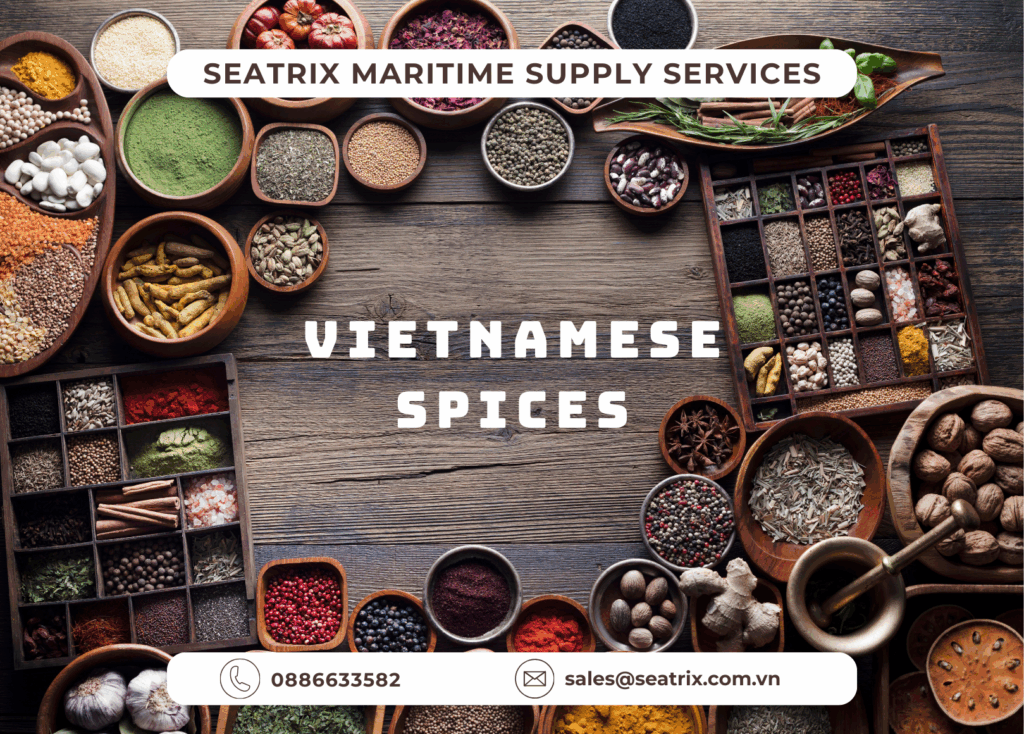
Vietnamese Flavors at Sea – Why International Chefs Always Ask for Vietnamese Spices
Working in a ship’s galley means seeing ingredients from all over the world arrive on deck: European cheese barrels, Norwegian salmon packed in dry ice, Australian beef sealed with care…
But there’s something amusing about departures from Vietnam: international chefs suddenly get excited in a very Vietnamese way. They don’t check the meat or the vegetables. They ask me one question:
“Do we have enough Phu Quoc pepper, Vietnamese garlic, and lemongrass?”
That was when I realized that Vietnamese spices aren’t just cooking ingredients — they are the “identity markers” international chefs bring into every dish.
Vietnamese pepper is always their first request. On long shifts, when fatigue drags on, a quick sprinkle of black pepper on a sizzling fish fillet releases a burst of aroma that wakes up the entire galley. Italian chefs love it for its “explosive, unmistakable flavor,” while American chefs say Vietnamese pepper is “richer, sweeter, and far more aromatic than any they’ve used elsewhere.”
Vietnamese garlic has its own strength. Small cloves, but packed with flavor. When sautéed, its fragrance is so intense that some European chefs questioned whether it was truly garlic. On board, the moment garlic hits hot oil, everyone in the kitchen knows: “Alright, it’s showtime.”
But lemongrass is the spice that surprises them the most. Few chefs understand how a single stalk can carry the scent of wind, grass, and sunshine. On long voyages, lemongrass becomes the “soul” of many seafood dishes. A Greek head chef once told me:
“Nothing removes fishiness as cleanly as Vietnamese lemongrass.”
Chili is simpler but powerful. Many Western sailors don’t eat spicy food at first — but after weeks at sea, they start adding a pinch of Vietnamese chili into soups, noodles, even stews. Vietnamese chili isn’t just hot; it has a “bright, fresh edge” that sharpens the whole dish.
And then, of course, the aroma of pho. That delicate mix of cinnamon, star anise, ginger, and cardamom. During stormy or cold days, simmering a small pot of pho broth is enough to warm the whole kitchen. Northern European chefs call it “the Vietnamese comfort aroma.”
What’s fascinating is that despite their different backgrounds, international chefs agree on one thing:
Vietnamese spices are incredibly versatile — far beyond Vietnamese cuisine.
Pepper for steak, garlic for pasta, lemongrass for Mediterranean seafood, chili for sauces, and pho spices as the “secret layer” that gives Western broths surprising depth.
The more I travel, the clearer it becomes:
Vietnamese cuisine is celebrated not only for its dishes — but also for its spices that tell stories.
Stories of soil, climate, people, and the subtle craftsmanship we Vietnamese often take for granted.
And in a ship’s galley, drifting across endless waters, these small jars of spices become the most natural bridge between cultures: no preaching, no grand claims — just aroma. Pure, unmistakably Vietnamese.